
The Complexity Premium: How a Smart, Diversified Stablecoin Strategy Beats the Market—Safely
The best opportunities always start out complicated. Stablecoins are no different. Here’s how I use structure, not luck, to capture high yield while managing risk.

When “High Yield” Breaks: The Balancer Exploit, xUSD Depeg, and Why My Rules Work
What You’ll Learn in This Article
What actually happened with Balancer and Stream Finance’s xUSD depeg (November 4, 2025)
Why even “stable” assets can fail—and how to spot the warning signs
How portfolio sizing and risk tiers protect against these events
A deep dive into my 40/30/20 allocation model and the position-sizing rules that keep me calm (and profitable) through chaos
How to build a DeFi portfolio that can beat the S&P while sleeping at night
A Bullish Macro View, a Harsh DeFi Lesson
This week, I published a video arguing that—even with soft prices and a fearful market—the broader crypto trend still looked bullish when viewed from altitude. I still believe that.
But the very next day, DeFi—true to form—reminded us why discipline matters.
Balancer Protocol, one of DeFi’s oldest and most respected automated market makers (AMMs), suffered a major exploiton its Ethereum pools—roughly $128 million drained due to a smart-contract vulnerability.
At almost the same time, Stream Finance’s xUSD, a yield-bearing stablecoin, lost its peg, plunging by more than 70% before partially recovering. The bounce didn’t restore confidence—the damage was done.
To be clear, I wasn’t invested. I mentioned the Balancer pool in the video because I regularly highlight interesting or eye-catching stablecoin yields, and this one—at an incredible 324% APY—definitely qualified. I did note that xUSD was a high risk stablecoin, but that was the extent of it.
And that’s exactly the point. This moment perfectly illustrates why I invest the way I do—why I rely on a structured system instead of chasing every explosive APY that crosses my screen. Because in DeFi, the line between “interesting” and “disastrous” can disappear overnight.
Complexity Is the Hardest Discipline
I love simplicity.
But here’s the paradox: in DeFi, what looks simple often carries the most risk. The “easy” yield, the one-click farm, the auto-compounder that promises 70% APY—that’s the illusion of simplicity. It hides layers of leverage, exposure, and counterparty risk most investors never see.
True simplicity—stable, repeatable returns—comes from embracing a bit of complexity upfront. That means designing structure, building rules, and letting math do the work.
My goal isn’t to find the shiniest new farm (though I won’t ignore an opportunity if it fits within my framework). My goal is to earn sustainable income while protecting principal—to build a yield engine that can survive stress, not just chase euphoria.
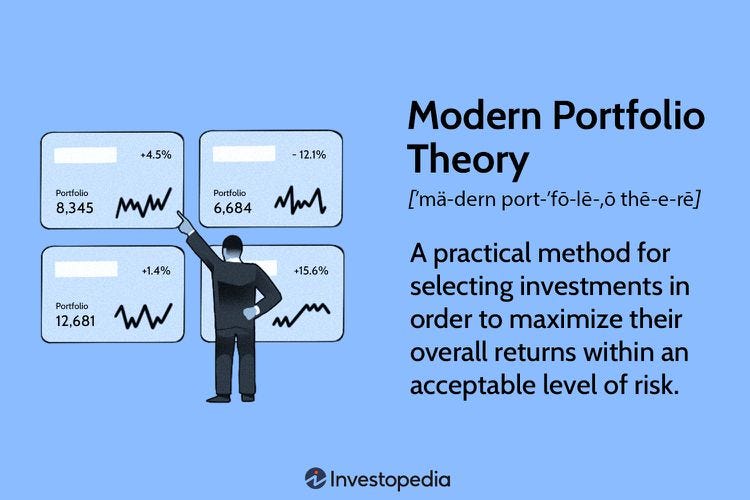
That’s why I rely on frameworks like the Half-Kelly Criterion, which optimizes position size relative to risk, and Modern Portfolio Theory (MPT), which minimizes volatility through diversification.
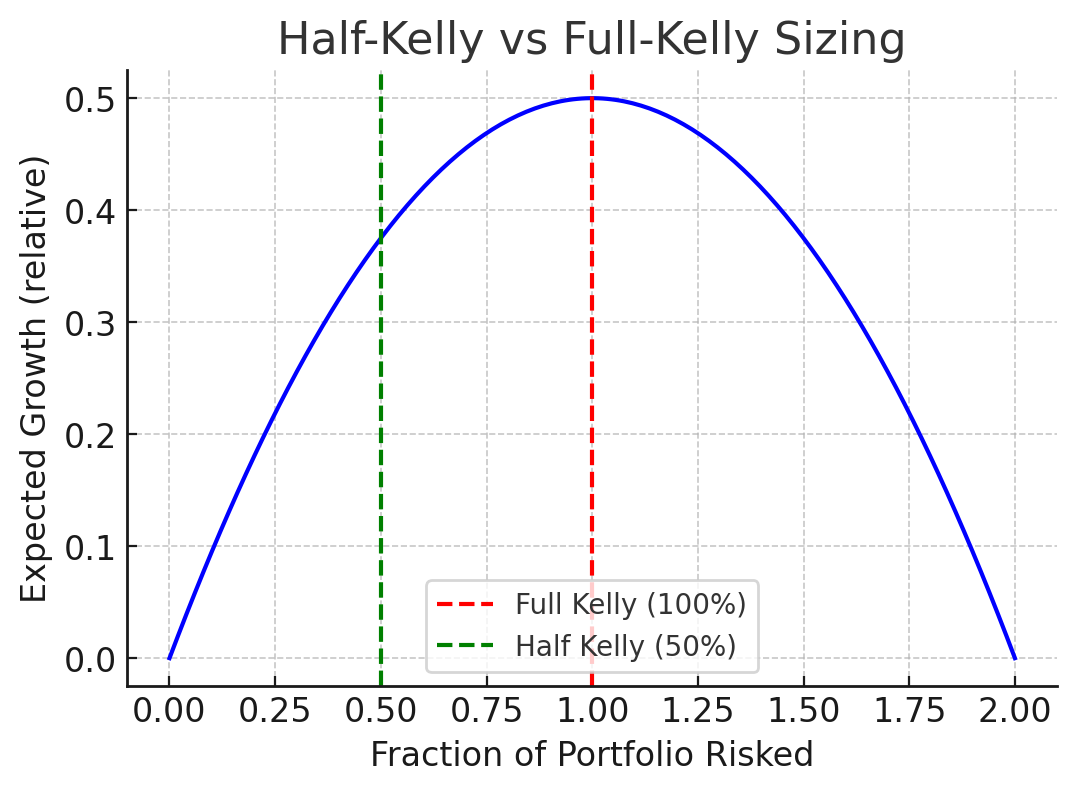
Together, they keep me humble, measured, and mathematically constrained. I can’t over-allocate to a shiny object, even if the yield looks irresistible—and that’s exactly why I believe my portfolio will survive when others blow up.
My Portfolio Structure (and Why It Works)
I group everything into risk tiers:
50% Low Risk: Protocols with battle-tested contracts, massive liquidity, and conservative yields—think Aave, Compound, Maker, Uniswap.
30% Medium Risk: Projects with solid fundamentals but shorter track records or moderate smart-contract complexity—protocols like Euler, Pendle, or StakeDAO.
20% High Risk: Newer or experimental yield strategies—sometimes small caps or innovative structured products like xUSD was supposed to be.
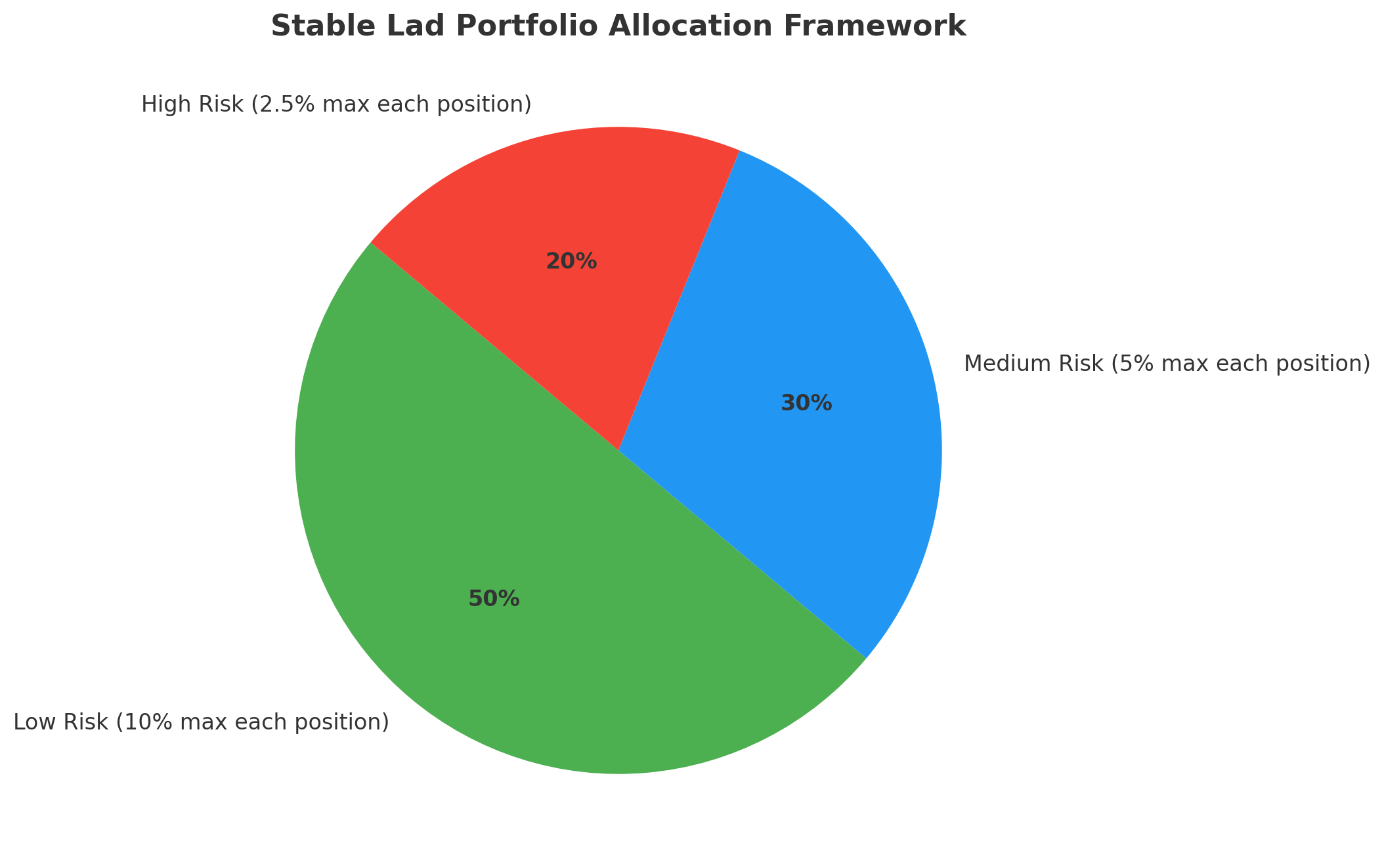
Then, position sizing within those tiers:
Low-Risk: up to 10% per position
Medium-Risk: up to 5% per position
High-Risk: maximum 2.5% per position
That last number is crucial.
Had I actually invested in xUSD, my rules would have capped exposure at 2.5%. Even a total loss would translate to a small scratch—not a portfolio-ending wound.
It’s not luck. It’s structure.
This portfolio is built on the assumption that volatility and stress are part of the game. Markets will break, protocols will fail, stablecoins will wobble—and that’s fine. The framework expects it. That’s the whole point: structure creates the stability to withstand chaos.
The Hidden Complexity That Saves You
Yes—this system adds complexity.
I track positions across multiple protocols and blockchains, rebalance periodically, and monitor yields. It’s real work. Not necessarily every day—I can step away for weeks once things are properly set—but it’s still active management. It’s not “set and forget.” It’s set and stay vigilant.
This structure is productive complexity.
It’s the kind that protects you—from yourself. From greed. From FOMO. From the impulse to chase whatever just doubled overnight, or to move capital the moment an APY dips for a week.
When a pool dries up, I don’t panic. When markets crash, I don’t sell. My structure already expects those events. It’s built on the assumption that things will go wrong—that protocols will get hacked, stablecoins will depeg, yields will compress, and sentiment will turn.
That’s the point. Failure is engineered into the model.
Diversification, position sizing, rebalancing—they’re not about predicting outcomes, they’re about surviving them. I don’t need to know which protocol will break next. I just need to stay balanced.
So when markets shake, I don’t.
The liquidations, the bearish chatter, the stress across smaller protocols—all of it becomes noise. Because my framework, grounded in probability and discipline, allows me to stay invested, compound steadily, and still outperform the S&P—with a fraction of the volatility.
In short: complexity isn’t my enemy—it’s my edge.
Lessons from Balancer and xUSD
Every market teaches something—if you’re listening.
Even giants can stumble.
Balancer wasn’t a fly-by-night project. It’s been around since 2020, handled billions in volume, and survived multiple cycles. But smart-contract risk never truly disappears. Longevity helps, but it doesn’t grant immunity.Stacked yield = stacked risk.
Stream Finance’s xUSD wasn’t necessarily flawed—it was just layered in risk. Yield on top of yield: lending arbitrage, incentive farming, dynamically hedged market-making. Each layer added complexity, and with it, fragility.Liquidity is lifeblood.
Confidence can vanish in hours. When it does, liquidity dries up, redemptions cascade, and even “stable” assets can spiral. That’s why deep markets and transparent reserves matter more than any APY figure.Rules beat predictions.
No one can forecast the next exploit, but anyone can size their exposure so that it doesn’t matter. The goal isn’t to be omniscient—it’s to be resilient.
The Bigger Picture
Zoom out.
Even with these setbacks, the DeFi landscape remains strong. Stablecoin market cap sits over $300 billion, led by USDT (~$183B) and USDC (~$74B). Issuers now hold well over $120 billion in U.S. Treasuries, making them one of America’s (and the World’s) largest indirect bondholders. Institutions like Stripe, JPMorgan, Western Union and Visa are building real infrastructure around stablecoins.
So while some protocols break, the foundation only strengthens. And that’s the beauty of DeFi—it’s antifragile. We learn, adapt, and evolve. The survivors get stronger.
My Core Belief
Crypto doesn’t reward the loudest or the smartest. It rewards the most disciplined.
I’d rather compound at 15–20% for years—with low volatility and steady cash flow—than chase 200% and blow up.
That’s why I’m the Stable Lad. Because I’ve been burned, learned, and rebuilt my system to survive anything—from a Balancer hack to a bear-market meltdown.
If that resonates, join me. Each week, I share my moves, portfolio shifts, and new yield strategies—always through the lens of risk management and stable, compounding growth.
👉 Subscribe for weekly deep dives on stablecoins, DeFi strategy, and macro trends.
👉 Paid members get access to my exact stablecoin mix, full portfolio allocations, risk scores, and ongoing MPT portfolio updates.
👉 Let’s keep growing—with clarity, discipline, and stability.
💡 Download the FREE Quick Reference Guide for Stablecoin Portfolio Construction:
https://stablelad.kit.com/61a28752ee
Disclaimer
This content is for educational and entertainment purposes only. Nothing here is financial advice. I am not a licensed advisor. Always do your own research and consult a professional before investing. Cryptocurrency and stablecoin investments carry inherent risk, including loss of principal. Proceed with caution, and remember—your capital is your responsibility.