
Unlocking Consistent Crypto Yield: A Step-by-Step Guide to 10-15% APY with DeFillama
Stable Yield, Any Market: My DeFiLlama Playbook

For anyone who’s been in the crypto space for a while, the rollercoaster of market volatility is a familiar ride. While massive gains are exhilarating, the equally massive losses can be gut-wrenching. After years of navigating this landscape (since 2012, to be precise), my focus has shifted from chasing speculative pumps to building a robust strategy for consistent, high-yield returns with minimal risk. My secret weapon? Stablecoins. One of my powerful tools in the toolkit - DeFillama.
DeFillama is an invaluable data aggregator for decentralized finance (DeFi), providing a comprehensive overview of liquidity pools, lending protocols, and various yield opportunities across countless blockchain networks. It’s the ultimate tool for cutting through the noise and identifying legitimate, high-APY stablecoin strategies.
This article will walk you through my process, step-by-step, for leveraging DeFillama to find stablecoin yield opportunities that can consistently deliver 10-15% APY in any market condition.
And if you prefer video, here is a simple walkthrough showing exactly how I use DefiLlama to find stablecoin yield.
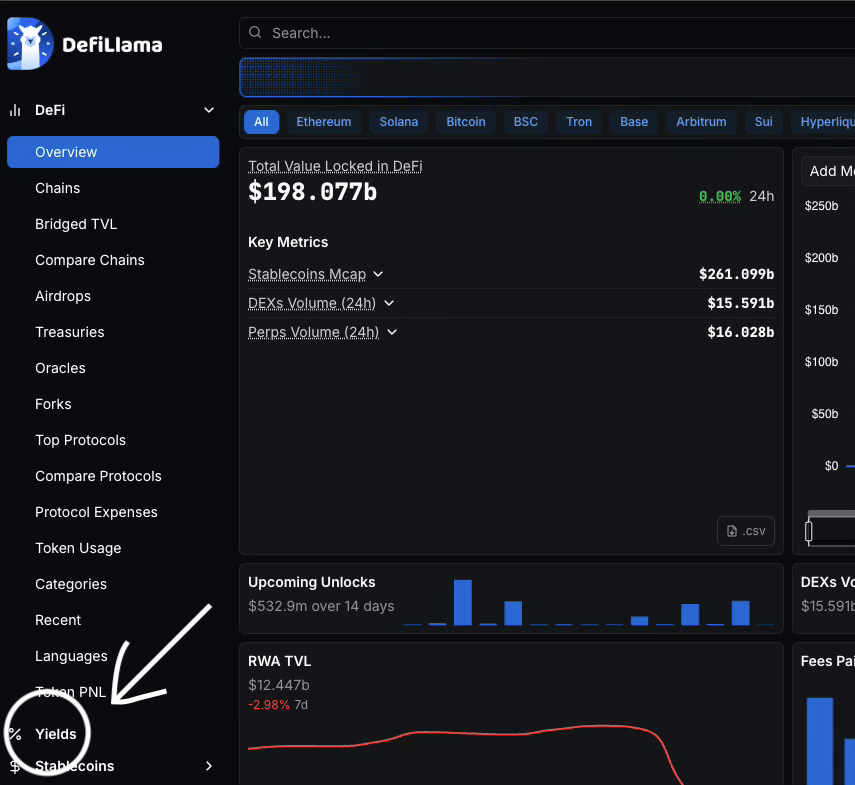
Step 1: Navigating to the "Yields" Section on DeFillama
First things first, head over to the DeFillama website. Once there, you'll want to navigate to the "Yields" section. This is where the magic happens, giving you a broad overview of various yield-generating opportunities.
Step 2: Filtering for Stablecoins and High APY
To narrow down the vast array of options, we'll apply some crucial filters. The goal is to identify stablecoin pools, which are designed to maintain a stable value, minimizing price risk.
On the "Yields" page, look for the filtering options. You'll want to:
Select "Stablecoins Only": This is paramount for a low-risk strategy. It filters out volatile assets and focuses solely on stablecoins like USDC, USDT, DAI, etc.
Sort by APY (Descending): Arrange the results from highest to lowest APY to see the most lucrative opportunities first.


Step 3: Deep Diving into Chains and Projects
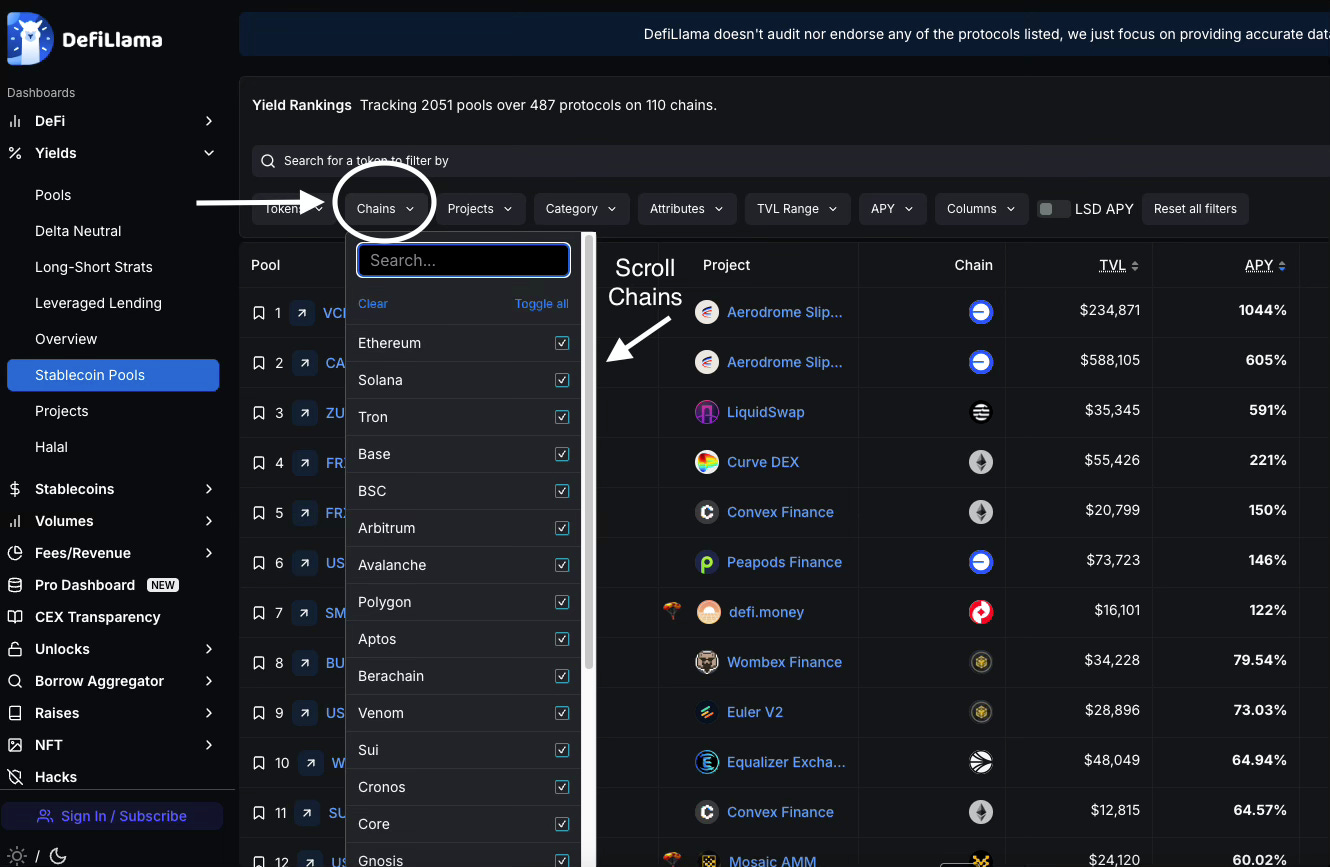
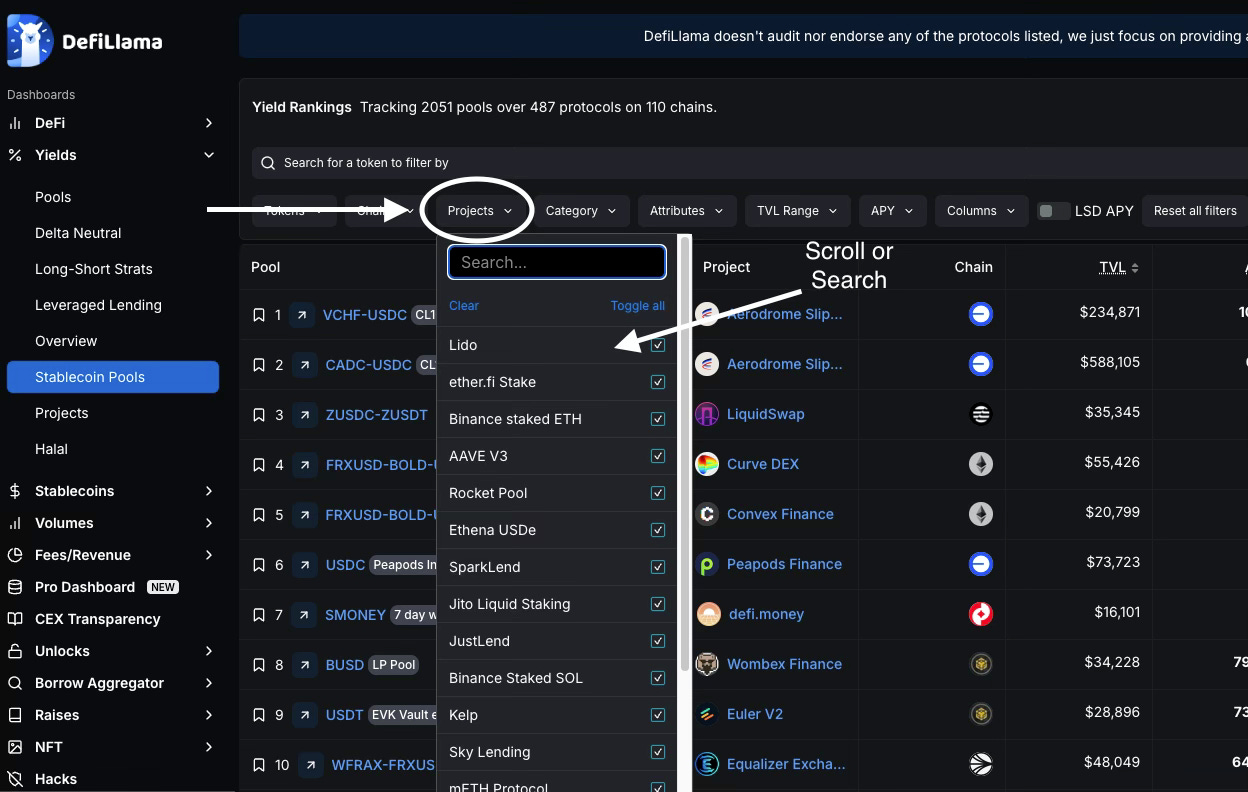
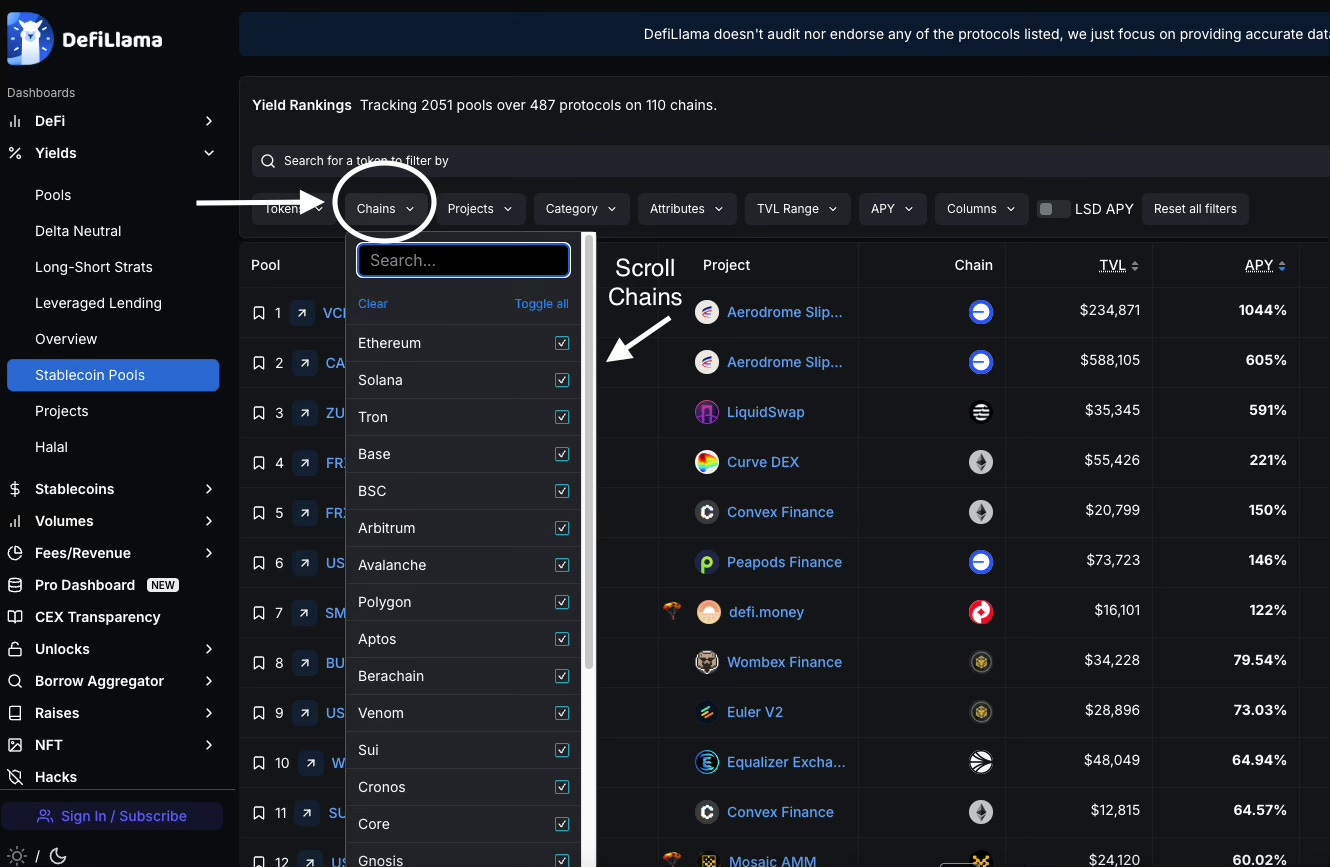
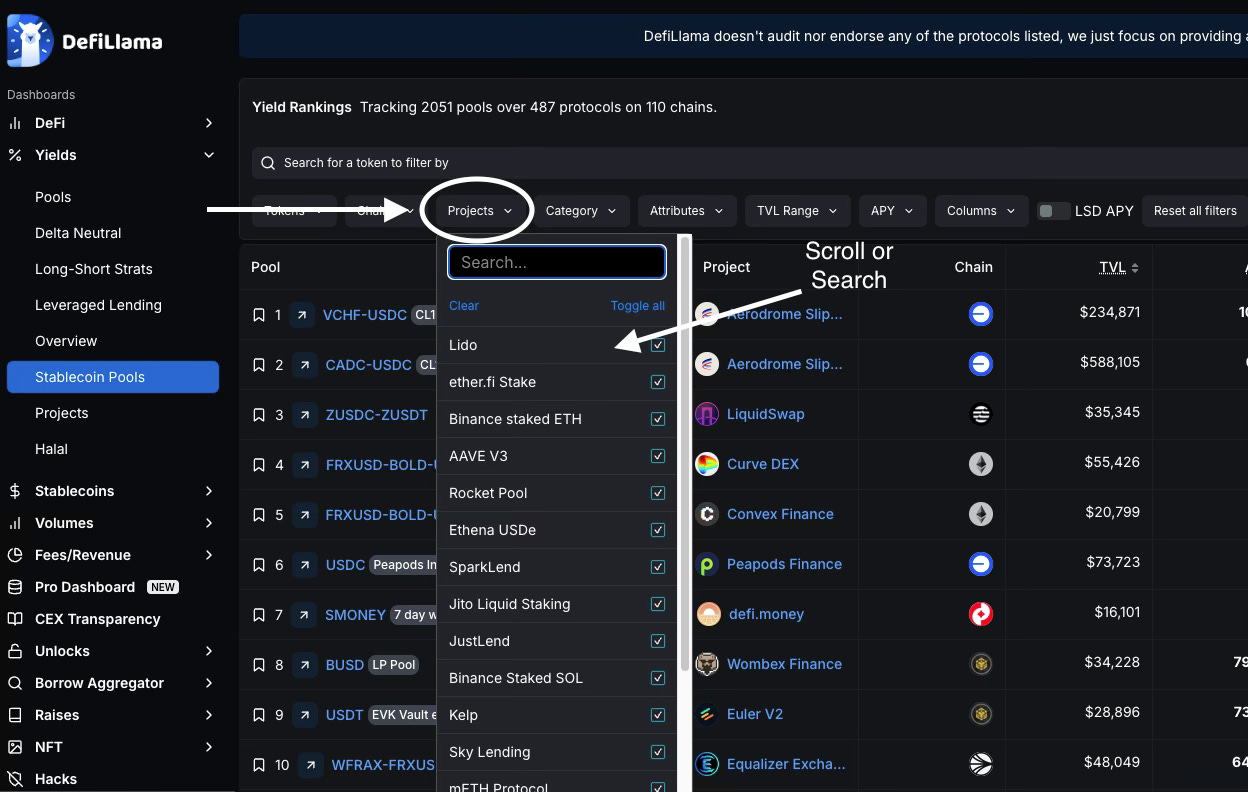
DeFillama also allows you to filter by specific blockchain networks and even individual DeFi projects. This is where you can refine your search based on your preferred ecosystem and risk appetite. I will be doing further articles discussing different blockchains and their pros vs cons.
Filtering by Chain: If you have a preferred blockchain (e.g., Arbitrum, Solana, Base, Ethereum), you can select it to see yields specifically on that network. This is useful for managing gas fees or leveraging existing assets on a particular chain.
Filtering by Project: You can also filter by specific DeFi protocols or projects. For example, if you trust a particular decentralized exchange (DEX) like Curve, Uniswap, or SushiSwap, you can filter to see yields offered by them.
Step 4: Understanding APY: Base vs. Reward APY
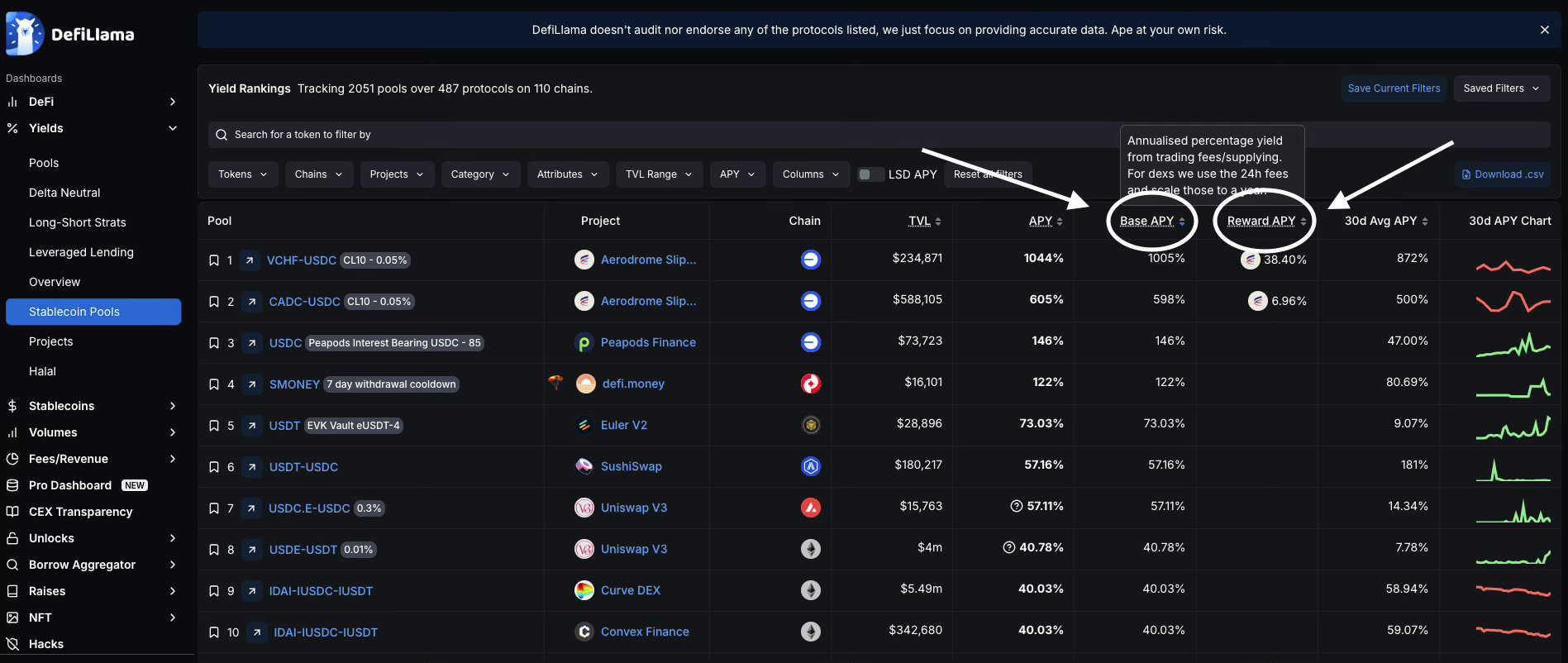
When evaluating yield opportunities, it's crucial to understand the difference between "Base APY" and "Reward APY."
Base APY: This is the core yield generated from providing liquidity or lending. It's typically paid out in the tokens you've deposited (e.g., more USDC for a USDC pool). This is the most consistent and reliable part of your return.
Reward APY: This represents additional yield paid out in a different token, often the governance token of the protocol offering the yield. While it can significantly boost your overall APY, it comes with the volatility risk of that reward token. Always consider how liquid the reward token is and if you're comfortable holding it. When a protocol is growing, they often use their own token to incentivize protocol growth. This can result in super high APYs, but remember that token issuance is always inflationary to the underlying token - in other words, this is NOT a stable coin.
My strategy primarily focuses on maximizing Base APY, as this provides the most stable and predictable returns. Reward APY is a bonus, but not the primary driver of my personal decisions, and when I earn reward tokens, I usually sell them immediately so I don’t get trapped into the Hopium cycle of praying the value increases. I just sell and buy more stablecoins, rinse and repeat.
Step 5: The Critical Verification Step: Always Check the Protocol Directly!
This is, arguably, the most important step in the entire process. Never solely rely on the APY displayed on DeFillama. While DeFillama is excellent for discovery, the reported APYs can sometimes be outdated, inaccurate, or reflect very short-term spikes.
Once you identify a promising pool on DeFillama (e.g., a USDC pool on Arbitrum offering 12% APY), your next action is to go directly to the decentralized exchange (DEX) or protocol that offers that pool.
Identify the Protocol: DeFillama will list the protocol offering the yield.
Navigate to Their Website: Open a new tab and go to the official website of that protocol.
Find the Specific Pool: Locate the exact liquidity pool or lending position you found on DeFillama.
Verify the APY: Check the live, real-time APY displayed directly on the protocol's interface. This is the most accurate representation of the current yield.
If there's a significant discrepancy between DeFillama's reported APY and the protocol's live APY, always trust the protocol's data.


Risk Management & Final Thoughts
While stablecoin yield farming is generally considered lower risk than speculative trading, it's not entirely without risk. Key considerations include:
Smart Contract Risk: The possibility of vulnerabilities in the underlying code of the DeFi protocol. Always choose well-audited and established protocols.
De-peg Risk: The stablecoin temporarily losing its peg to the underlying asset (e.g., USDC falling below $1). This is rare for major stablecoins but has happened. Check out my article on why I think USDC is the most stable of all stable coins and why its the majority of my own portfolio
Impermanent Loss (for LPing): While less of a concern with stablecoin-to-stablecoin pairs, it's a factor if you're providing liquidity to volatile pairs. For stablecoin pools, the risk is minimal unless one of the stablecoins de-pegs.
TVL: I always make sure to deploy my capital in pools that have plenty of TVL. At least 6 figures. Though this is not a surefire risk practice. Volume can spike in newer protocols and completely disappear just as quickly. It’s simply one parameter to consider.

If you haven’t read how I design my portfolio for proper risk management, you may want to check that out below.

By diligently following these steps and prioritizing robust Base APY opportunities, you can build a diversified stablecoin portfolio that consistently generates significant yield, even when the broader crypto market is experiencing turbulence. This strategy is about smart, capital-preserving growth, not chasing fleeting pumps.
Disclaimer: This article is for educational and entertainment purposes only and should not be considered financial advice. I am not a licensed financial advisor. Always do your own thorough research and consult with a professional before making any investment decisions.